
Sharing a Life Together
A letter on neighbourliness, moral imagination, and longing for community in southeast London

Last summer, I wrote a Substack essay titled “We are not friends, we are acquaintances” It was a challenge to modern Britain: that we should strive for deeper and more meaningful relationships with one another. It’s something I’ve been increasingly thinking about ever since.
At my local church, we have a collective mission as a congregation: to bring heaven down to southeast London. This means actively participating in releasing truth, goodness, and beauty onto every street. For crime, poverty, loneliness, and violence to be erased, and for broken relationships to be restored. Highly idealistic, one may argue, but a large aspect of faith is not allowing the hard structures of reality to stop one from believing that change can take place. And this starts with moral imagination. If you cannot envision goodness, there is less chance that you will take pragmatic steps towards achieving it.
Anyway, it has been this matter that has inspired much of my writing over the last year around formation and moral atmosphere. There is a tendency in secular liberal spaces to avoid these subjects. Not necessarily because people disagree, but because the culture often lacks the metaphysical language or grammar to articulate them. Yet they are utterly crucial to building relationships, community, and fulfilment.
One of my recent reflections came after a culmination of events. About a month ago, at my midweek church group, there was a discussion about what it would look like for us to see the fullness of life on our streets. My contribution was: “seeing everyone on our streets actually share a life together.” I mean, this is the space that many of us have decided to spend most of our lives within. It makes sense for our homes and wider streets to become the foundation of our belonging.
Many agreed. It led to the elder members of our group discussing how neighbourhood watches and street parties once created opportunities for social interaction and relationships to form. A common theme, however, was how these spaces tended to be dominated by the white middle classes, and how wonderful it would be for people from other demographics and ethnicities to participate more fully.
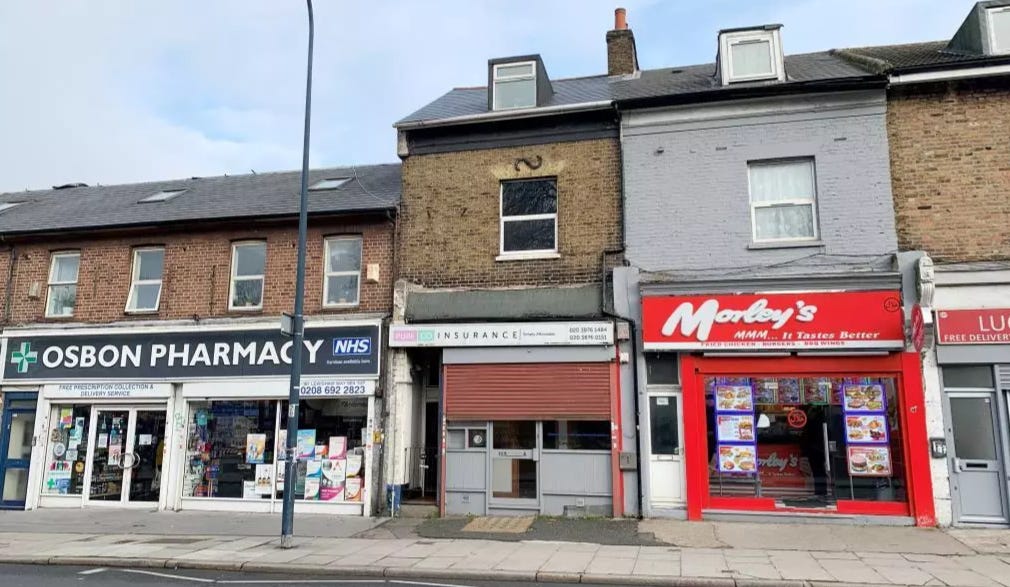
A few weeks later, I was reminded of this again while reflecting on how my local barbershop feels stuck in early-2000s Black London through its music and aesthetics, whilst there is a café on the same road that feels very “young professional with an artisan vibe.” I use both spaces, and they feel like completely different moral worlds with their own social codes, yet they exist side by side on the same street. Both are probably unaware of each other’s existence.
I am not anti-modernity. Liberalism has brought about real goods: individual freedom and peaceful coexistence across difference. These are genuine achievements. In a plural society like modern Britain, they help prevent conflict and allow people with very different moral visions to live side by side. This is unprecedented for most of history.
But like any philosophy, there are trade-offs, even if subtle. When the goal becomes non-interference, social cohesion is gradually redefined as not offending, not imposing, and getting along at a surface level. Over time, this can quietly lower the bar. Cohesion becomes “we are not in conflict” rather than “we share a life.” Expectations of what abundant community life looks like begin to diminish.
And I have been thinking that perhaps we have lost something deeper.
What would it look like to have genuine friendships with our neighbours? To be able to rely upon one another? To share ideas, help each other where we are struggling, and uplift one another? I believe there is so much that life can offer, but achieving that requires stepping outside the mediating boundaries of liberal society.
I do not have all the answers yet, and I am not sure if I ever will. But I will continue to wrestle with these questions as I strive, alongside many others, to bring heaven to southeast London.
Dear Jide, I could not agree more. For a long time I've felt that identity politics actually makes it harder for people to have authentic relationships. The need for the govenment and institutions to prove that the policy decisions they make are just and fair to all members of society obviously is well intentioned, however, it leads a kind of bureaucractisation of human relationships, a spead sheet social justice, which is dehumanising. Genuine relationships develop over time and take some working at often, but the rewards are real, sometimes especially because of the differences between people. There are better ways of making this possible other than through bureaucratic means. I'm old, I know this is true. I tried to explain this recently to a young woman canvassing for the labour party. The moment I said I had reservations about identity politics her eyes glazed over. I didn't pursue my point because I could see she had written me off as a bigot and stopped listening. I found this ironic because it proved my point. For her the theory was more important than the reality of how its implementtion affects communities. Anyway, just to say Jide, I really enjoy reading your clear and well reasoned articles - they make me feel I'm not going mad after all. Keep going because your insights and observations are much appreciated.